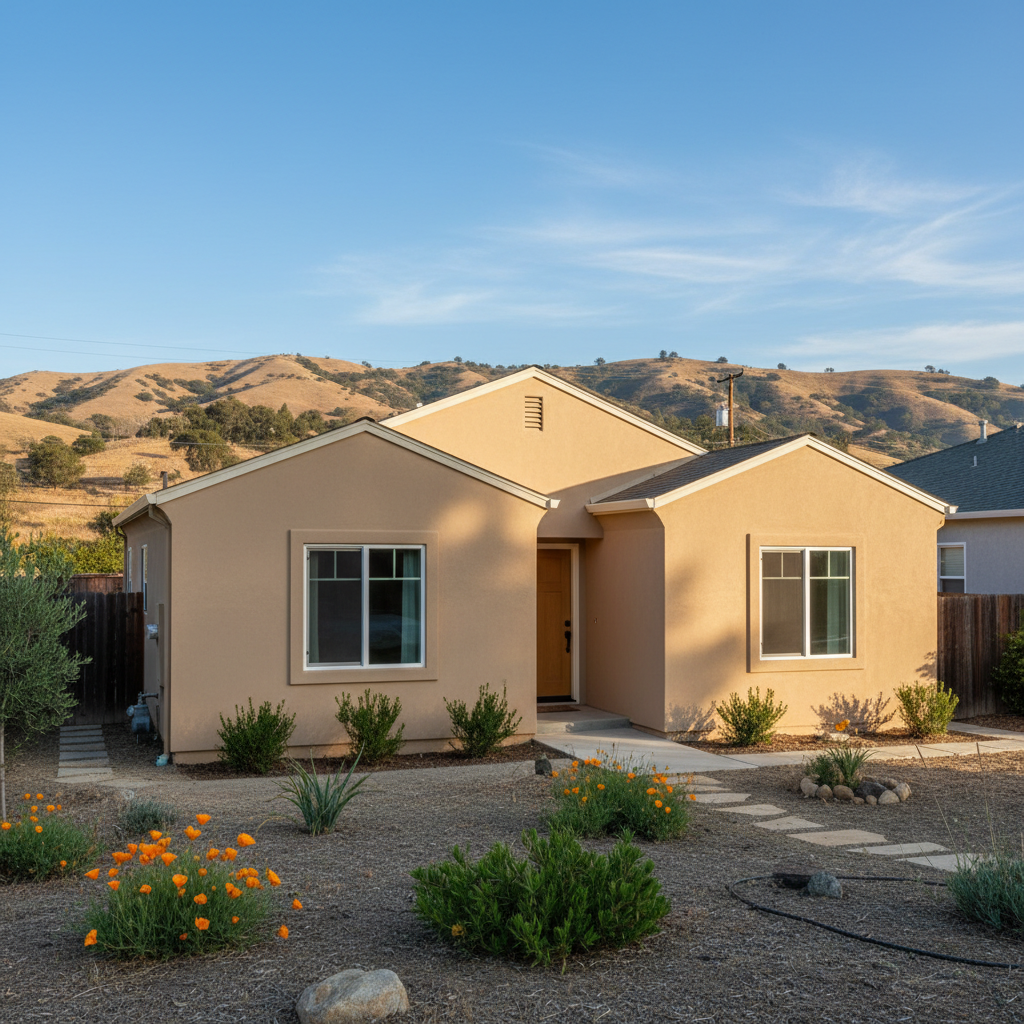
Alright, let's talk about getting EIFS installed on your Cupertino home. I totally get it – you're probably looking to spruce up the exterior, maybe you're after better insulation, or perhaps you just want that sleek, modern vibe. Whatever your reason, the big question always boils down to cost, doesn't it? And honestly, figuring that out isn't always as simple as you'd hope.
EIFS, which stands for Exterior Insulation and Finish Systems, is basically a multi-layered cladding system. It gives you insulation, keeps moisture out, and leaves you with a really nice finish. Folks often call it "synthetic stucco" because it can look pretty similar, but it's actually put together in a totally different way. We're talking about an insulation board, then a reinforced base coat, and finally, a textured finish coat. The best modern EIFS systems even have drainage layers built in to stop water from getting trapped. That's super important, especially with the heavy Bay Area rains we sometimes get.
What Makes EIFS Pricing Go Up or Down?
You might hear all sorts of numbers when you ask about EIFS costs, and there's a good reason for that. A few key things can really swing the price. It's not just about how many square feet you have, though that's definitely a big piece of the puzzle.
- The Kind of System: Not all EIFS are created equal. Most homeowners around here tend to go for Class PB (that's polymer-based). It uses a thinner base coat, mesh, and a finish coat. Then there's Class PM (polymer-modified), which is thicker, applied more like traditional stucco, and usually costs more because of the materials and extra work. Commercial jobs sometimes pick PM for its added impact resistance.
- How Tricky the Project Is & Your Design: Is your house a simple rectangle, or does it have a lot of fancy architectural bits? Think about arches, columns, detailed trim, multiple bump-outs, or even just a ton of windows and doors. Every single corner, every opening needs careful attention and flashing. More cuts and custom work mean more time and specialized labor, and yep, that adds to the final bill.
- Getting the Surface Ready: If we're putting EIFS over perfectly smooth, clean sheathing, that's one thing. But if we're dealing with old, uneven siding that needs to come off, or a surface that requires a lot of prep work or repairs, that's going to bump up the cost. We can't just slap EIFS onto something weak; the surface underneath has to be solid.
- Insulation Thickness & Type: One of the best things about EIFS is how well it insulates. The thicker the insulation board (usually Expanded Polystyrene, or EPS), the better the R-value you'll get. Of course, the material cost goes up too. Standard thickness is often 1-2 inches, but some projects might need more, especially if you're really trying to maximize energy efficiency. Different types of insulation, like XPS or GPS, can also change the price.
- Can We Even Get To It? If we need a lot of scaffolding or lifts to reach high or tricky areas, that's an extra expense for equipment and the time it takes.
- Finish Texture and Color: Fine sand, medium float, or those special stone aggregate finishes all have different material price tags. Darker pigments might also need more coats, which adds to the cost.
Typical EIFS Cost Ranges in Cupertino
Let's get down to some actual numbers for our area. Just remember, these are averages, and every single job is truly unique. Still, this should give you a pretty good idea of what to expect.
For a standard Class PB EIFS system on a house that's not overly complicated, you're generally looking at around $10 to $18 per square foot. This price covers both the materials and the labor for a complete system.
- On the Lower End ($10-$12/sq ft): Imagine simple, flat walls, easy access, not many architectural details, and standard 1-inch insulation. Maybe it's a small addition or a very straightforward commercial facade.
- Mid-Range ($13-$15/sq ft): This is where most residential projects tend to land. We're talking average complexity, a few windows, maybe some modest trim, and 1.5-2 inches of insulation. A 2,000 square foot home might end up in the $26,000 to $30,000 range here.
- Higher End ($16-$18+/sq ft): These are for more complex designs – lots of corners, arches, intricate detailing, thicker insulation (say, 3 inches or more for maximum R-value), or tough access that requires serious scaffolding. If you're picking a premium finish or a Class PM system, that'll push the price up too.
Overall, professional EIFS installation for an average-sized home (around 1,500 to 2,500 square feet) can run anywhere from $16,000 to $28,000. This is a bit more upfront than traditional stucco, which might be $7-$9 per square foot, but EIFS gives you better insulation and more flexibility.
What's Usually in a Quote?
When you get a quote from a solid company like Aim High Stucco & Plastering, it should be pretty thorough. Here's what you're typically paying for:
- Materials: This includes the insulation boards (EPS, XPS, or GPS), the base coat, reinforcing mesh, primer, and the final finish coat. It also covers things like flashing, sealants, and any specialized trim pieces. Material costs usually make up about 35-45% of the total project.
- Labor: This is a big one. Installing EIFS is a specialized skill, and it needs certified applicators. Labor costs typically account for 35-45% of the total. This covers everything from getting the surface ready, attaching insulation, putting on multiple coats, embedding mesh, and that final finish.
- Equipment: Scaffolding, lifts, sprayers, and other tools necessary for a proper, safe installation. This usually makes up 5-10% of the cost.
- Permits & Waste Disposal: Don't forget these. Local building permits are a must, and properly getting rid of old materials (if that applies) is part of the job. These can run anywhere from $150 to $2,000, depending on how big the project is.
- Substrate Preparation: Any work needed to get the existing surface ready for EIFS. This might include fixing the sheathing or upgrading air barriers. This can add 10-15% to the overall cost, but it's absolutely crucial for keeping your warranty valid.
A good quote will break these elements down for you, so you really understand where your money is going. It's only fair, right?
How to Avoid Paying Too Much
Nobody wants to just throw money away, especially on a big home improvement project. Here's how to be smart about your EIFS investment:
- Get Multiple Quotes: This is a no-brainer. Talk to at least three different contractors. It helps you compare not just prices, but also how they plan to do the job, what materials they suggest, and their timelines.
- Ask for a Detailed Breakdown: Don't just accept a single lump sum. Insist on a quote that itemizes materials, labor, permits, and any prep work. This lets you see exactly what you're paying for and compare apples to apples.
- Understand the System: Ask questions about the specific EIFS system they plan to install. Is it Class PB or PM? What kind and thickness of insulation? Does it include a drainage plane? Knowing these details helps you figure out the true value.
- Check References & Licensing: Always, always check references and make sure the contractor is properly licensed and insured for work in California. You want someone with a proven track record, especially with EIFS, which demands precise installation.
- Don't Automatically Go for the Lowest Bid: The cheapest quote often means corners are being cut somewhere. This could be in the quality of materials, the experience of the labor, or skipping crucial prep steps. With EIFS, a bad installation can lead to really expensive moisture problems later on. A low bid might look good at first, but it could cost you a fortune in repairs down the road.
- Consider the Long-Term Value: EIFS, even with its higher upfront cost compared to traditional stucco, can offer significant long-term savings. Its superior insulation can slash your energy bills by 20-50%. Plus, it's flexible and less likely to crack than traditional stucco, meaning less maintenance and fewer repairs over its 40-60 year lifespan.
- Be Wary of "Instant" Quotes: A reputable contractor will need to visit your property, check out its unique features, and take measurements. Anyone giving you a firm price over the phone without actually seeing the job site is probably not someone you want working on your home.
Investing in EIFS for your Cupertino home is a smart move for both energy efficiency and curb appeal. Just do your homework, ask the right questions, and pick a contractor who truly cares about quality and being upfront with you. It'll save you headaches and money in the long run.